

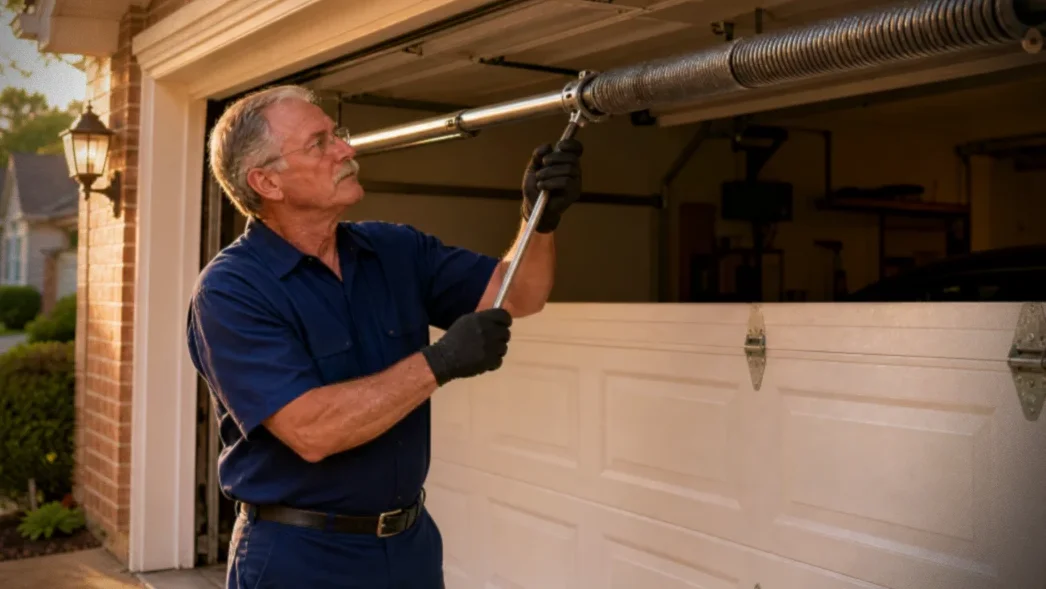
Your garage door is the biggest moving part of your house. On a typical home it goes up and down more than a thousand times a year, so sooner or later something wears out, slips, or snaps. The good news: most common garage door problems fall into a handful of predictable categories, and knowing what you're looking at can save you money, time, and a trip to the emergency room.
I'm Jay. I've been repairing garage doors across Ellisville and West St. Louis County since 1978. Here are the problems I get called out for the most, what usually causes them, and an honest take on what you can safely handle yourself versus what you should leave to a pro.
Need it fixed today? Same-day service is available in most cases. Call (636) 388-9774.
1. The Door Won't Open (or Only Opens a Few Inches)
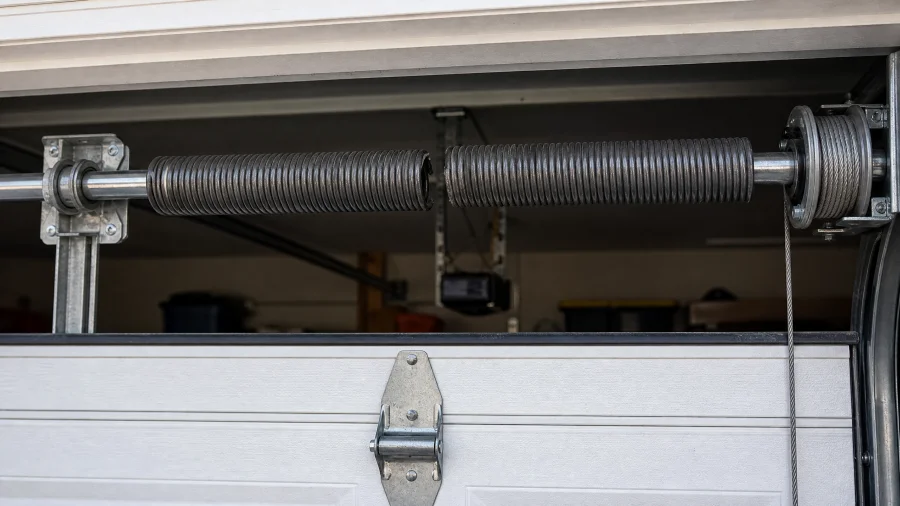
If your door lurches up a few inches and then stops - or won't budge at all - the most common culprit is a broken torsion spring. When a spring snaps, the opener no longer has anything to counterbalance the weight of the door, so it can't lift it.
Here's the tell: if you heard a loud bang from the garage recently (some folks think it's a gunshot), that was almost certainly a spring letting go, not the opener failing.
DIY or pro? This is a pro job, full stop. See the spring section below for why.
2. A Loud Bang Followed by a Dead Door
As above - a loud bang is the classic sound of a broken spring. People often assume the opener died and start shopping for a new one. Nine times out of ten the opener is fine; it just has nothing to pull against.
Before you spend money on a replacement opener you don't need, have the springs checked first.
3. Broken or Frayed Cables
The cables run alongside the door and work together with the springs to raise and lower it safely. When a cable frays or snaps, the door can hang crooked, get stuck, or come down hard on one side.
DIY or pro? Pro. Cables are under tension and connected to the same spring system - working on one without the other is dangerous.
4. The Door Is Off Its Track
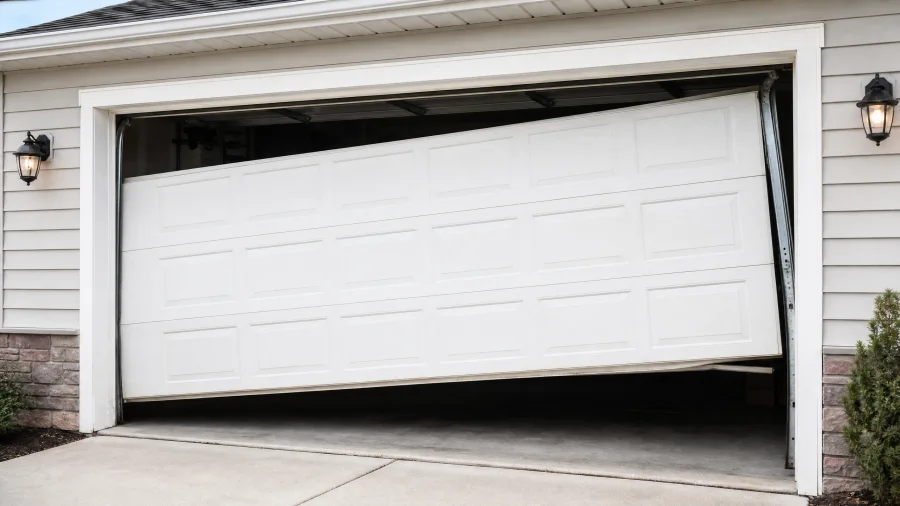
If your door looks crooked, is binding as it moves, or has come out of the metal tracks entirely, stop using it. Running the opener on an off-track door can bend panels and damage the tracks further, turning a smaller repair into a bigger one.
Common causes: a broken cable, a snapped roller, or something (a car bumper, usually) that bumped the door.
DIY or pro? Pro. Forcing it makes it worse.
5. A Noisy Garage Door
Grinding, rattling, squealing, or clunking usually points to one of a few things:
- Dry rollers, hinges, and springs that need lubrication
- Loose nuts and bolts from years of vibration
- Worn rollers that need replacing
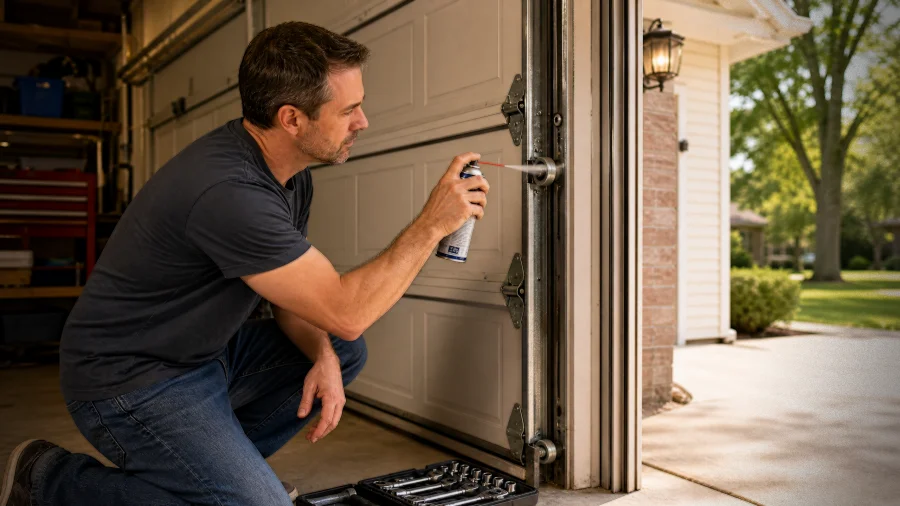
DIY or pro? This is one you can often stay ahead of yourself. A couple times a year, tighten the visible hardware with a socket wrench and apply a garage-door-specific lubricant (not WD-40, which is a cleaner, not a lubricant) to the rollers, hinges, and springs. If it's still loud after that, something's worn and it's worth a look. See our maintenance tips below.
6. The Door Reverses Before It Closes
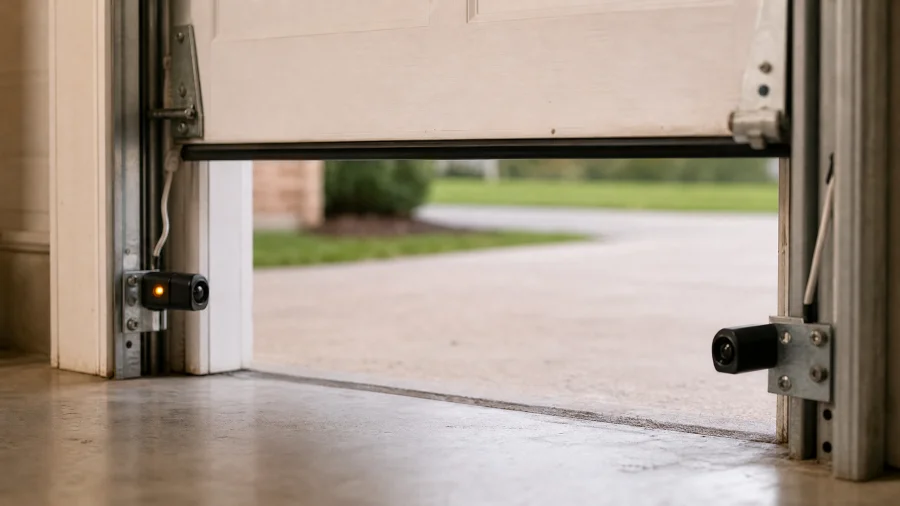
If your door starts down and then rolls right back up, look at the two small safety sensors near the floor on either side of the door. When they're misaligned or their lenses are dirty, they think something is blocking the doorway and reverse the door as a safety measure.
DIY or pro? Start with the easy stuff yourself: wipe the sensor lenses clean and make sure both are pointed at each other (most have a small light that goes solid when aligned). If the door still won't close, the sensor or wiring may need service.
7. The Remote or Keypad Stopped Working
If only one remote is dead, try new batteries first, then reprogram it. If nothing works from any remote but the wall button still operates the door, you may have an antenna, receiver, or interference issue.
DIY or pro? Batteries and reprogramming are fair game for a homeowner. If that doesn't do it, it's a quick diagnosis for a pro - and Jay can program remotes and keypads for most existing opener brands.
8. The Door Opens or Closes Too Slowly - or Unevenly
Sluggish or jerky movement often comes back to lubrication, worn rollers, or a spring that's losing its tension and nearing the end of its life. Uneven movement (one side higher than the other) points to a cable or spring issue and should be checked before the door binds up completely.
A Serious Word on Garage Door Springs
I bring this up on purpose. Garage door springs are wound under extreme tension - enough to cause serious, permanent injury or worse if they let go while you're working on them. Every year people are hurt trying to swap a spring with the wrong tools and no training.
This is genuinely the one repair I'd ask you not to attempt yourself. It's a fast, safe job for someone who does it every day, and a real hazard for someone who doesn't. I carry the most common torsion and extension spring sizes right on my truck, so in most cases a broken spring can be replaced the same day you call.
Simple Maintenance That Prevents Most of This
You can head off a good share of these problems with about 20 minutes, twice a year:
- Lubricate the rollers, hinges, and springs with a garage-door lubricant
- Tighten the visible nuts, bolts, and roller brackets
- Test the balance - with the door closed, pull the manual release and lift the door halfway by hand. A well-balanced door stays put. If it drops or flies up, the springs need attention.
- Clean the sensor lenses and check their alignment
- Watch and listen every time it runs - new noises or jerky movement are early warnings
When to Call West County Garage Door Service
If you're dealing with a spring, a cable, an off-track door, or anything that just isn't right, don't force it and don't let it sit - a door that's limping along today can strand your car or compromise your home's security tomorrow.
When you call West County Garage Door Service, you get me, Jay - the owner - not a call center and not a subcontractor. I've been fixing doors in this community since 1978. You'll get an honest diagnosis, a clear price before any work begins, and same-day service in most cases across Ellisville, Wildwood, Ballwin, Eureka, Manchester, and the surrounding West St. Louis County area.
Call (636) 388-9774 or request a free estimate today.
Rated 5.0 stars across 145+ Google reviews from your neighbors.