

An annual garage door maintenance checklist should cover ten things: test the auto-reverse safety system, lubricate the springs and rollers, run a balance test, inspect the cables, check hinges and weatherstripping, clean the photo eyes, tighten the track hardware, test the opener and battery backup, and listen for wear. In West St. Louis County, do it in early fall - before the first hard freeze.
Most homeowners run their garage door 3 to 5 times a day, every day, and never look at it until something bangs, grinds, or stops halfway. I'm Jay Mangelsdorf. I've been fixing and maintaining garage doors in West St. Louis County since 1978, and I can tell you that most of the emergency calls I get in Ellisville, Ballwin, Wildwood, and Eureka trace back to one of ten small things that were cheap to fix in September and expensive to fix in February.
Here's the checklist I actually run through on a tune-up call - the first eight you can do yourself in about an hour, and the last two are where it's worth having a pro look.
What You'll Get From a Yearly Check
The whole list takes about an hour twice a year. Catching a fraying cable or a dying spring before it lets go is the difference between a $0 inspection and an emergency repair call - and between a door that fails on your schedule and one that traps your car inside at 6:45 on a Monday morning.
1. Test the Auto-Reverse Safety System (Monthly, Not Yearly)
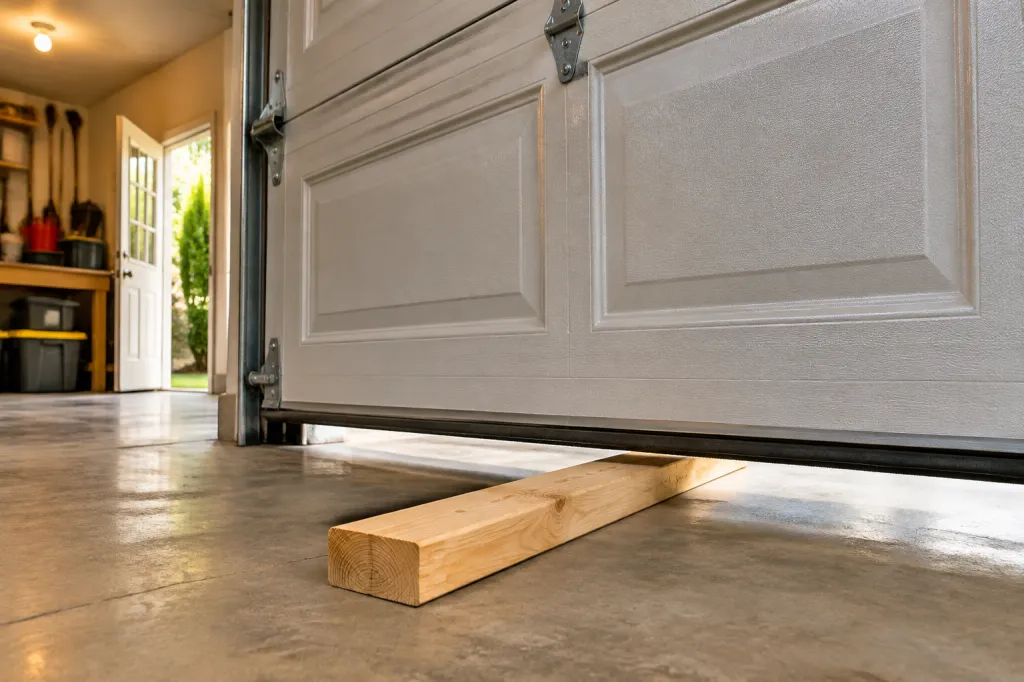
This is the one item on the list that shouldn't wait a year. LiftMaster's owner's manuals are blunt about it: "Safety reversal system MUST be tested every month. Door MUST reverse on contact with a 1-1/2" high object (or a 2x4 laid flat) on the floor."
Federal safety rules under UL 325 - mandated by Congress in 1991 - require openers sold since 1993 to have an external entrapment protection device, which is why the photo-eye sensors near your floor exist at all. They only work if they work, so:
- Wave a broom handle through the beam while the door is closing. The door should reverse immediately.
- Lay a 2x4 flat on the floor in the door's path and close the door. It should reverse the moment it touches the wood.
- If the door touches the 2x4 and keeps pushing, stop using the opener and get it adjusted. That's not a checklist item you postpone.
2. Lubricate the Springs, Rollers, and Hinges
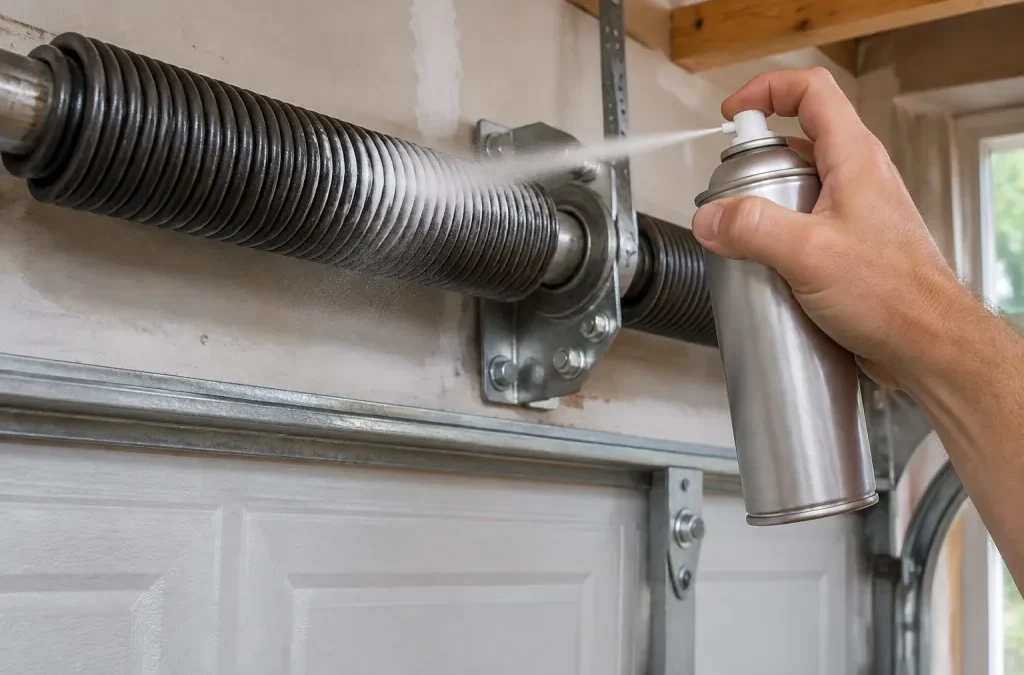
Your torsion spring does the actual work of lifting a 150-pound door, and it runs dry. Use a proper garage door lubricant - a silicone-based spray or white lithium grease - on the spring coils, roller stems, and hinge pivot points, twice a year.
Two rules from the manufacturers themselves:
- Never use WD-40. It strips the factory lubrication off the spring and attracts grit. (WD-40 is a solvent, not a lubricant - it's the fastest way to turn a quiet spring into a squealing one.)
- Don't lubricate the tracks. Chamberlain's own maintenance guidance says it directly: tracks are meant to stay dry, so the rollers roll instead of sliding. Wipe the tracks clean with a damp rag instead.
3. Run a Balance Test
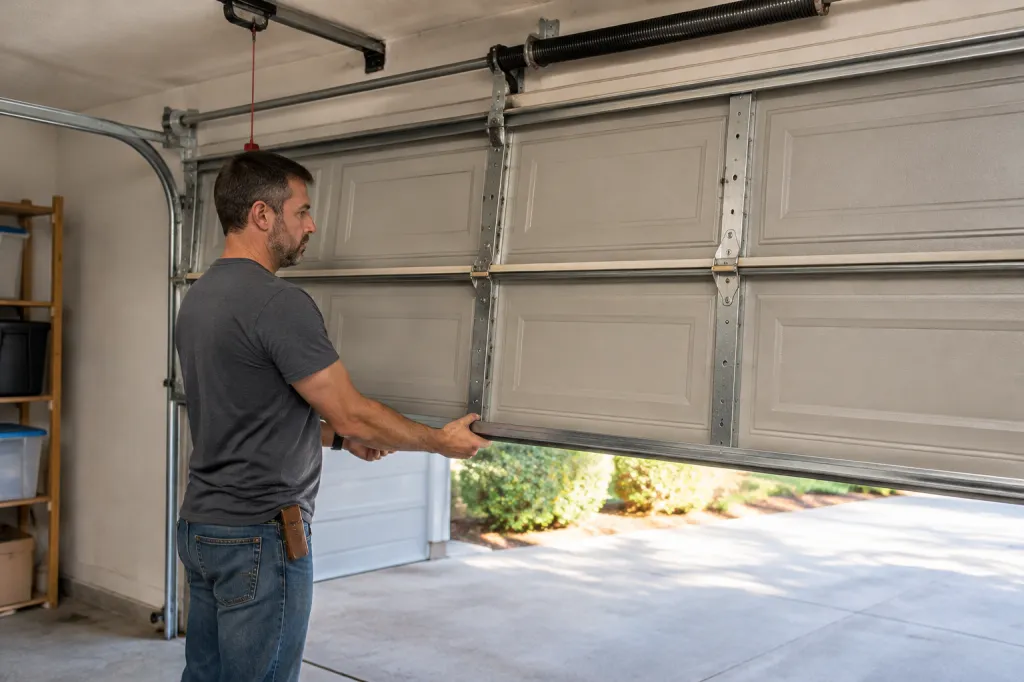
With the door closed, pull the opener's emergency release cord (with the opener off), lift the door to about waist height, and let go.
- If the door stays put, the springs are doing their job.
- If it slides down or shoots up, the springs are out of balance - which means your opener's motor is fighting the springs every single cycle, wearing itself out years early.
This is also the test your opener manual warns about: LiftMaster states the opener should only be installed on a "properly balanced" door, because an unbalanced door may not reverse when it's supposed to. If the door fails the balance test, that's a spring issue - see item 4.
4. Inspect the Cables - But Don't Touch Them
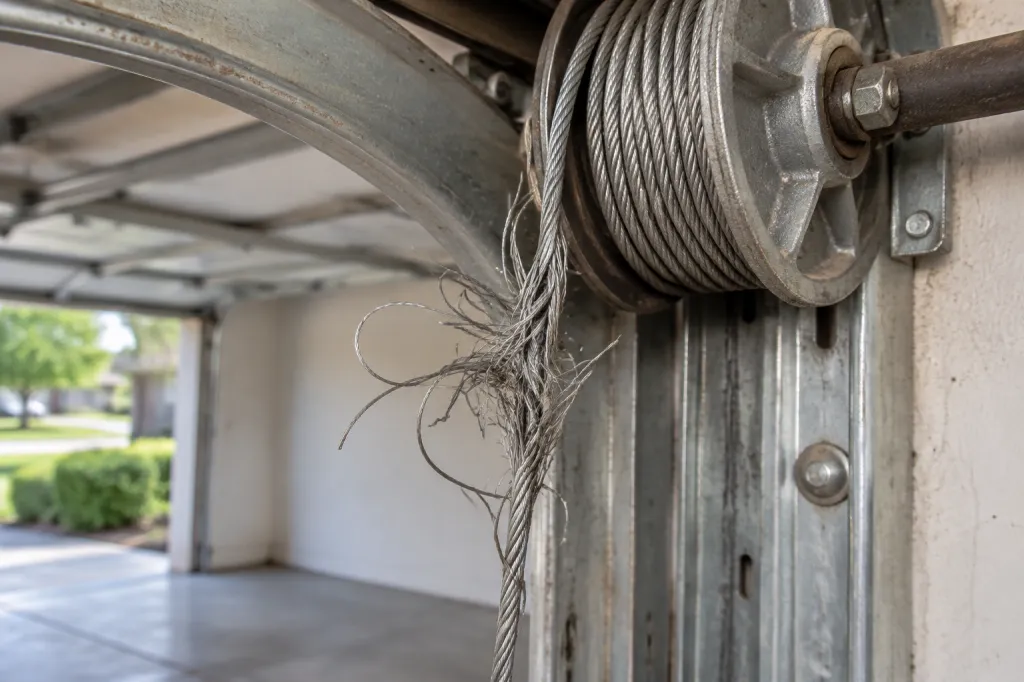
Look at the lift cables that run alongside the drums at the top of the vertical track. You're checking for frayed strands, rust, or a cable that's jumped its drum. A fraying cable looks like a bird's nest of loose wire.
Here's the line between DIY and a pro call: torsion spring cables are under hundreds of pounds of tension even when the door is closed. Lubricating is fine; adjusting or repairing cables and springs is not a homeowner job. If you see fraying or the door sits crooked in the opening, call us - (636) 388-9774 - and stay clear of the door until it's fixed.
5. Check the Rollers and Hinges for Wear
Steel rollers crack, nylon rollers wear out, and hinges get hairline fractures - especially on doors that have been running since the 90s. Run your eye down both tracks and along every hinge between panels:
- Chipped or cracked nylon rollers, and steel rollers with wobbly bearings, should be replaced before they jam the door in the track.
- A cracked hinge between two panels will eventually let the door rack sideways, which chews up the track alignment.
Roller and hinge replacement is a cheap fix with the door in place, and a much more expensive one after a roller disintegrates mid-cycle.
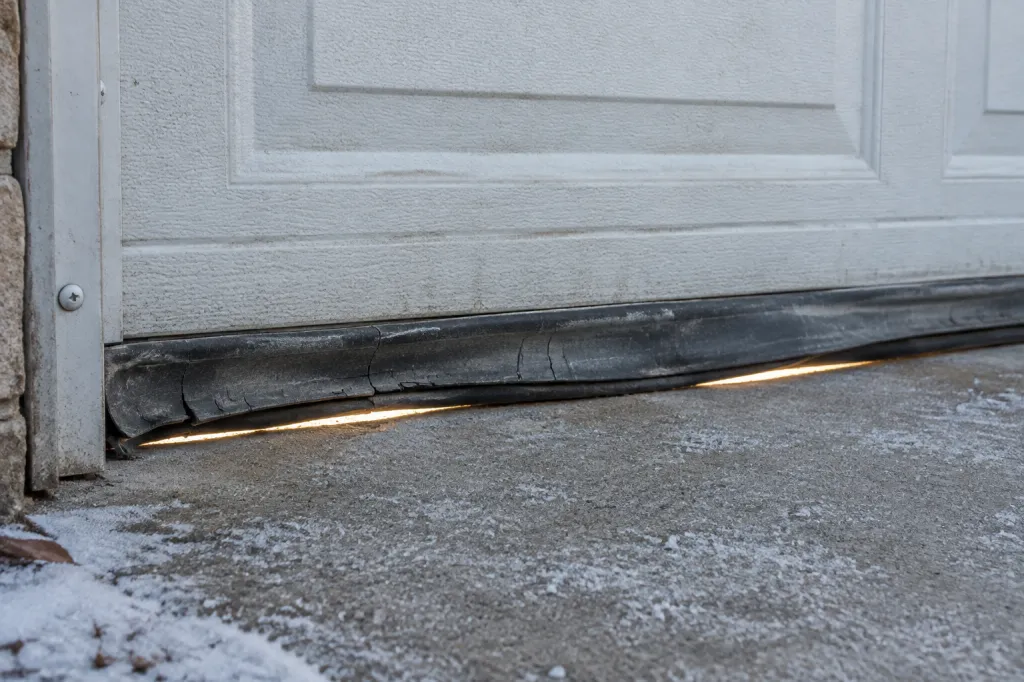
6. Replace Worn Weatherstripping and the Bottom Seal
That rubber bottom seal is the only thing keeping rain, leaves, mice, and 15-degree January air out of your garage. In Missouri, the weather does its best to kill it: freeze-thaw cycles in winter crack the rubber flat, and humid summers accelerate rot on the wood retainer.
Squeeze the bottom seal - if it's brittle, cracked flat, or daylight shows under the door when it's closed, replace it. The retainer strips slide out and new ones slide in on most standard doors; it's a 20-minute job that pays for itself in heating bills alone.
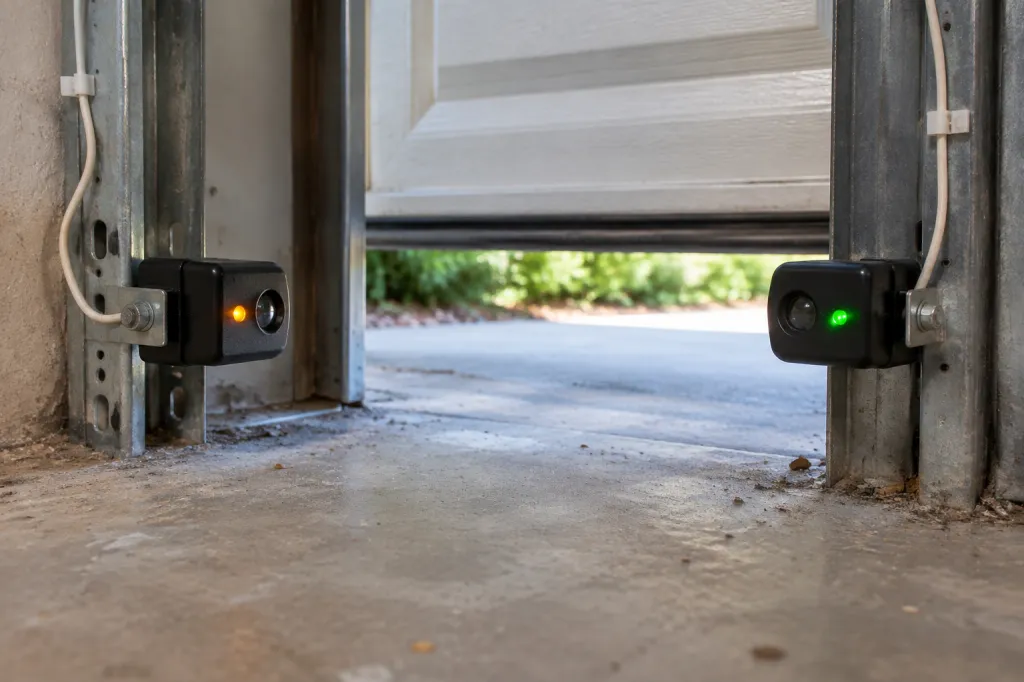
7. Clean and Realign the Photo-Eye Sensors
Those two little boxes at the bottom of each track are the entrapment protection required by federal law since 1993, and they fail for the dumbest reasons: cobwebs, dust, a leaf, or a bumped bracket.
- Wipe both lenses with a soft, dry cloth.
- Check that both sensors' LED lights are solid (not blinking).
- If they blink, realign the brackets until the light steadies, then hand-tighten the wing nut.
If your door starts closing and then reverses for no visible reason, dirty or misaligned photo eyes are the first thing to check - and the cheapest.
8. Tighten the Track Hardware and Check Track Alignment
Garage doors vibrate, and a couple hundred vibration cycles loosen the lag bolts and track brackets. With the door closed, walk the whole system with a socket wrench and snug up every bracket and hinge bolt - snug, not gorilla-tight.
Then look down each track line like you'd sight down a pool cue. A track that's been bumped by a car, a ladder, or a kid's bike will bend inward and pinch the rollers. Small bends can be nudged back with a rubber mallet; if a track section is kinked or the door binds anywhere, that's a track replacement, not a DIY project.
9. Test the Opener Force, Travel, and Battery Backup
Run the opener through a full open-close cycle and watch it, instead of just listening from inside the house:
- The door should travel smoothly to the fully-open and fully-closed positions without stopping short or drifting past the floor.
- If it reverses randomly or strains mid-cycle, the force settings may need adjustment - or the opener is fighting an unbalanced door (back to item 3).
- If you have a battery backup unit (required on many newer installs, and standard on the LiftMaster and Chamberlain openers we install), unplug the opener and run the door on battery once a year. A backup battery that dies quietly in the garage is worth zero during a power outage.
10. Listen for the Sounds That Predict Failure
Once a year - ideally once a season - operate the door with the garage quiet and just listen:
- Squeaking or grinding on the first open of the day: dry or fatiguing springs (item 2).
- A loud bang from the garage when nobody's in there: that's a torsion spring letting go. Don't force the door; the opener can't safely lift it alone.
- Scraping or rubbing on one side: track alignment or a worn roller.
- Pop-and-slip: a cable that's jumped a drum.
Then have a professional set of eyes on it. A proper tune-up includes a spring cycle inspection, cable check, balance test, and opener force adjustment - and it's how you find out your spring has 500 cycles left instead of finding out at 6:45 on a Monday. West County Garage Door Service runs those checks Monday through Sunday, 6am to 5pm, across Ellisville, Ballwin, Wildwood, Eureka, Manchester, and Chesterfield.
What a Garage Door Tune-Up Costs in St. Louis
In St. Louis, a professional garage door tune-up typically runs $89-$150 per visit, and most documented annual services land between $100 and $130.
Two things to know before you shop on price:
- Promo pricing skews low. St. Louis shops run seasonal tune-up specials as low as $29 to generate leads. That's a marketing hook, not the going rate - a real, documented tune-up usually costs more, and the "special" often ends where the upsell begins.
- Scope matters. Some companies offer multiple doors and openers in their maintenance plans, so a multi-door home gets better per-door value there than three separate single-door tune-ups. Ask what's included - a written safety checklist is the difference between a tune-up and a lube-and-leave.
Call West County Garage Door Service at (636) 388-9774 for current tune-up pricing and to get on the fall schedule.
When to Do This in St. Louis
Early fall, before the first hard freeze, is the window. Cold snaps are when tired springs finally break (metal contracts, brittle fatigued steel fails), when cracked weatherstripping announces itself, and when you want that garage sealed up. If you only do the list once a year, do it in September or October. If you do it twice, hit it again in early spring, after the freeze-thaw cycle has done its worst.
FAQ: Garage Door Maintenance Questions We Hear in West County
How often should I have my garage door professionally serviced? Once a year for a door in normal shape. If your door is over 15 years old, gets heavy use, or has already had a spring replacement, twice a year is worth it. The safety-reverse test (item 1) should be monthly regardless - that one's written into every LiftMaster and Chamberlain owner's manual.
What maintenance does a garage door need every year? Lubricating springs, rollers, and hinges; a balance test; a cable and roller inspection; weatherstripping replacement as needed; photo-eye cleaning; tightening track hardware; and testing opener travel, force, and battery backup. The 10 items above cover all of it in about an hour.
Can I lubricate my own garage door springs? Yes - and you should, twice a year. Use a silicone-based garage door lubricant or white lithium grease on the coils. Never use WD-40 (it strips the factory lubricant), and never adjust or remove a torsion spring yourself; lubrication is fine, but spring repair is a job for a trained technician with the right winding bars.
Why is my garage door so loud in the morning? The first cycle of the day runs on whatever lubrication is left on the springs and rollers. Squeaking, grinding, or a "stick-slip" sound on the first open means the metal is running dry or the spring is fatiguing. A proper lubrication pass (item 2) usually quiets it; if it doesn't, have the springs inspected.
How long do garage door springs last? Most residential torsion springs are rated for about 10,000 cycles. With a door running 3-5 cycles a day, that's roughly 7-10 years. Heavy daily use, a door out of balance, or a spring lubricated with the wrong product can cut that short - which is why the annual inspection matters.
How much does a garage door tune-up cost in St. Louis? In St. Louis, a professional garage door tune-up typically runs $89-$150 per visit, with most documented annual services landing between $100 and $130. Seasonal specials as low as $29 show up as lead-generation offers - a real tune-up with a written safety checklist usually costs more.
How do I know if my garage door spring is broken? You'll usually hear it first: a bang from the garage, then a door that's suddenly heavy, rises a few inches and stops, or won't open at all. A visible gap of about an inch in the coil near the winding cone confirms it. Don't run the opener on a broken spring - call for repair the same day.
What happens during a professional garage door tune-up? We run the full checklist above: safety-reverse test, spring and cable inspection, balance test, roller and hinge check, lubrication, weatherstripping assessment, photo-eye cleaning, hardware tightening, and opener force and travel adjustment. If something's at end of life, you find out on your schedule instead of the spring's.
Does maintenance really extend the life of a garage door? Yes, and not in a vague way. A balanced door with lubricated springs lets the opener motor do a fraction of the work, which is what wears out first on a neglected door. Doors on an annual lubrication-and-balance routine routinely outlast the 10,000-cycle spring rating, while dry, unbalanced doors eat springs and openers years early.
Jay Mangelsdorf has owned and operated West County Garage Door Service in West St. Louis County since 1978, serving Ellisville, Ballwin, Wildwood, Eureka, Manchester, and Chesterfield. Need a tune-up or a second opinion on a spring? Call (636) 388-9774 - Monday through Sunday, 6am to 5pm.